
Venomous Creatures
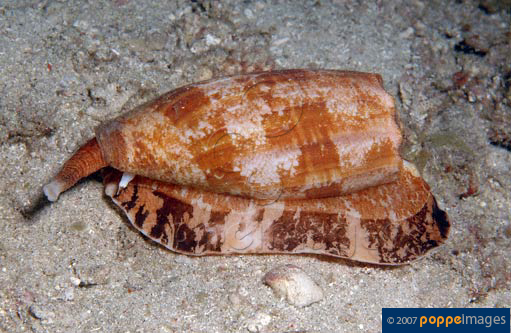
Cone Snails
SIGNS AND SYMPTOMS:
- Pain, swelling, redness and numbness where stung.
- Long-term muscle weakening, especially in the respiratory muscles
- Impairments in speech, hearing, and vision
- Breathing difficulties may result in respiratory failure and, in the worst case scenario, death if CPR is not administered.
- High venom concentrations have the potential to be fatal quickly if left untreated.
- (Cone Snails, n.d.)
FIRST AID
Unfortunately, there is no particular treatment for envenomations caused by cone snails. The goal of first aid is to manage pain; yet, it will not treat the venom. The envenomation is not always fatal, but this is depending on the species of Cone snail, the amount of venom injected and the victims size and vulnerability. It is possible for complete paralysis to occur which can lead to death.
- Call 917 for an ambulance
- Clean the wound with clean, fresh water
- Apply a pressure-immobilisation bandage. This will prevent the toxins from spreading throughout the body.
- To help with pain management, apply heat. This does not denature the toxins.
- Watch for signs and symptoms of progressive paralysis.
- Have a manually operated ventilator or a mask with a bag valve ready to provide mechanical ventilations.
- Don’t wait for paralysis symptoms to appear. Always ask for an assessment at the closest emergency room. Even in the case of no pain, the sting location could still be fatally toxic.
- (myDr, 2021)
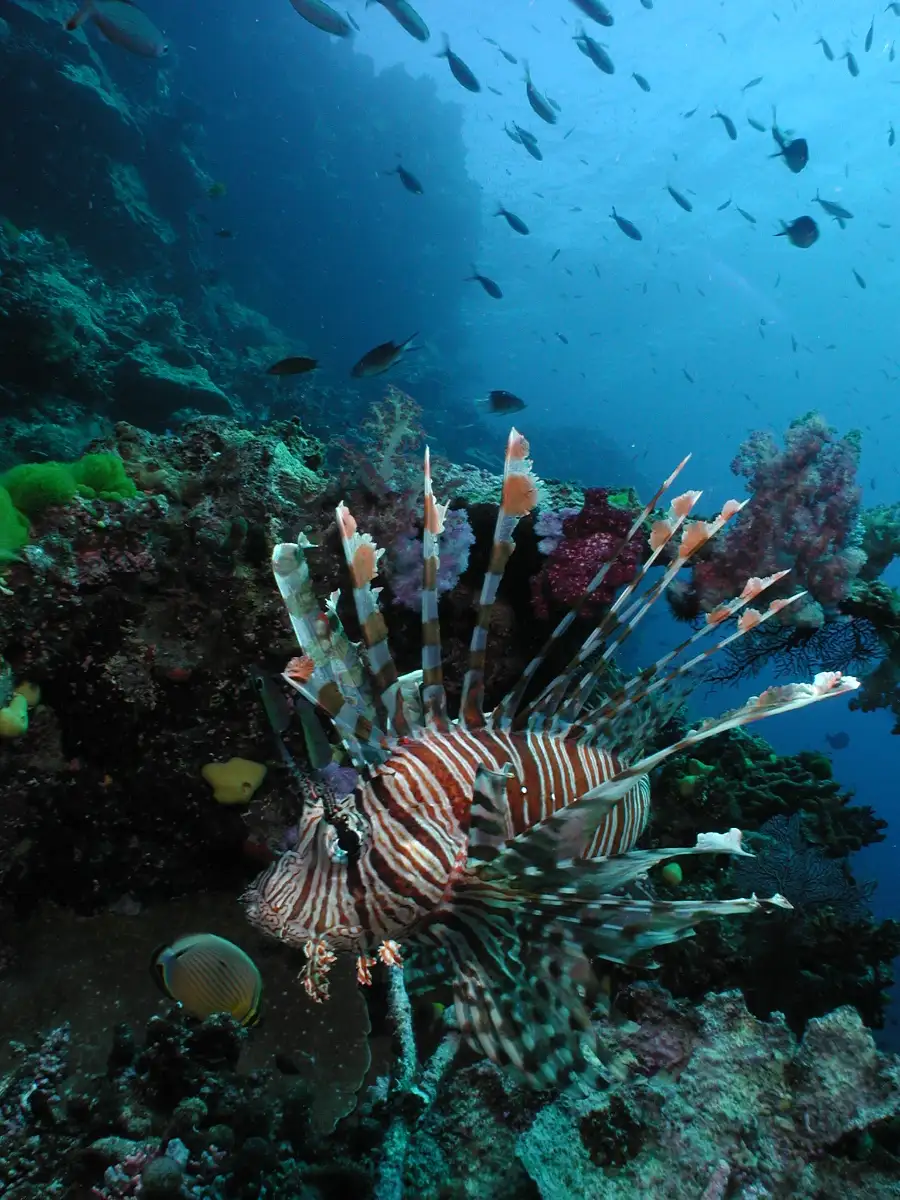
Lionfish
SIGNS AND SYMPTOMS
Initial symptoms include:
- Redness
- Swelling
- Numbness
- Bruising
- Throbbing pain
- Bleeding
Sever symptoms that may occur if allergic to venom include:
- Swelling of throat and face
- Shortness of breath
- Headache
- Fever
- Nausea
- Cardiac arrest
- Temporary paralysis
- Fainting
- Dizziness
FIRST AID
- Gently remove any pieces of the spine that are still in the skin.
- Disinfect wound by cleaning the affected area with soap and clean water or antiseptic towelettes if there is a first aid kit available.
- Using a clean cloth or towel, apply direct pressure to the wound to clot the blood and control the bleeding.
- To help break the venom down, apply as much heat as the patient can tolerate without being burnt. Keep the water temperature below 48.9°C and apply for 30 – 90mins.
- Take medication such as ibuprofen or acetaminophen to reduce the pain.
- To reduce the chance of an infection, apply a topical antibiotic cream then wrap a bandage around the wound.
- Seek medical attention if the sting causes severe pain.
(Gotter, 2020)
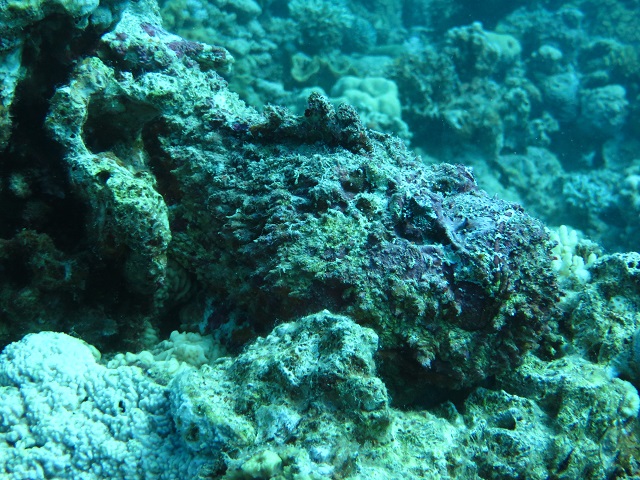
Reef Stonefish
SIGNS AND SYMPTOMS
Of envenomation:
- Immediate excruciating pain. This pain may last a couple days.
- A bluish tinge may occur around the site of envenomation.
- One or more puncture marks which may be bleeding
- Swelling around the site of envenomation. Whole limb swelling can occur in extreme cases.
- IF UNTREATED – Breathing difficulties, muscle paralysis and a possibility of death
Pain Response:
- Vomiting
- Slow heart rate
- Nausea
- Incoherent behaviour
- Low blood pressure
- (Panes, 2018)
FIRST AID
- Rescuers must wear thick soled shoes or shuffle their feet along the ocean floor so they are not envenomated when going to rescue patient.
- Call 917 for an ambulance, stating suspected stonefish envenomation.
- If the spines are embedded, treat it as though it were a penetrating injury by applying pressure to the pads at the base of the spine—DO NOT REMOVE THE SPINE.
- If possible, place affected limb in hot water, as hot as the patient can tolerate (45°C for no longer than 30mins at a time)
- If the patient is not breathing normally and is unresponsive, follow the emergency action plan: DRS ABCD
- (Panes, 2018)
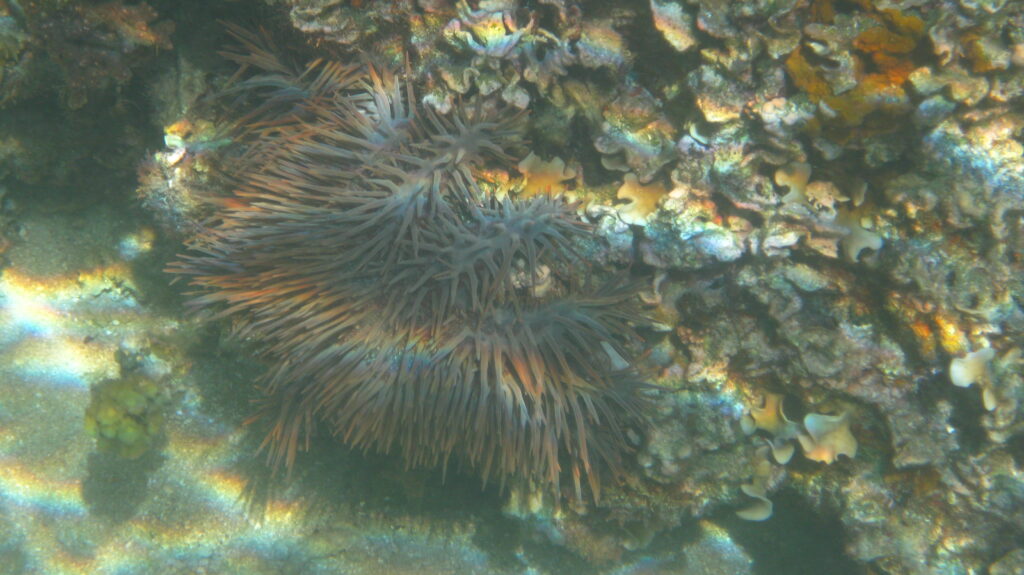
Crown of Thorns
SIGNS AND SYMPTOMS
Not all of these may occur. Symptoms can last from 30mins to 3hrs
- Immediate severe pain
- Nausea
- Headaches
- Vomiting
- Coughing
- Numbness
- Swelling at the site of the injury
- Weakness
- Tingling
- Significant bleeding
- Joint aches
- Paralysis (Not common)
FIRST AID
- Using tweezers, try removing any spikes remaining in the wound.
- Clean the wound with soap and rinse thoroughly with fresh water. Do not cover wound as it may increase the chance of developing an infection.
- Cover the injured area with hot water for at least 30 minutes but no longer than 90 minutes. Make sure the water is as hot as the patient can tolerate but not exceeding 60°C. This will help control the pain.
- A severe sting may require an injected local anaesthetic.
(Crown of Thorns Starfish Sting Symptoms and Treatment, n.d.)