
Safety Tips
Each resort has their own guidelines which are important to follow
GENERAL SAFETY
- Always have a snorkel buddy
- It’s best to tell someone where you are going if snorkelling alone
- Wear a rashy (Rash vest) and reef safe sunscreen.
- If you are snorkelling and you get a cut, always wash it properly with soap to disinfect it and apply disinfectant ointment.
DANGEROUS AREAS/CONDITIONS
- Uzzies Gutter to the left of the Outrigger can be dangerous as it may pull you under the water
- Do not go too close to the break as you could get swept out
- Do not swim in strong currents
- Never swim against a current, it will just tire you out, instead swim across to the shore.
- Don’t swim at low tide. You could accidentally cut yourself on a coral or rock or you could touch something spikey and/or venemous. It is also dangerous for the environment.
VENOMOUS CREATURES
- Cone Snails > If you see a Cone Shell DO NOT TOUCH IT! Deep inside the cone shell lives an extremely venomous snail that stings by ejecting an arm-like tube attaching to the prey/predator, inside the tube is a sharp harpoon like tooth encasing venom, the tooth is fired through the tube paralysing their prey with the venom. (Cone Snails, n.d.)
- Stonefish > Stonefish are the most venomous fish in the world! Stonefish have 13 spikes along its back that will release venom when stood on. If you accidentally step on a stonefish it will extend its spikes and releases the venom. The deeper the spikes go and the more venom injected, the worse the outcome. (Spencer, 2020) Although they are not common to see around the Coral Coast, they are present so it’s always best to be careful with where you stand. I like to kick my fins above the sand patch I am about to stand on to uncover the potential fish, once I see it is safe I stand up.
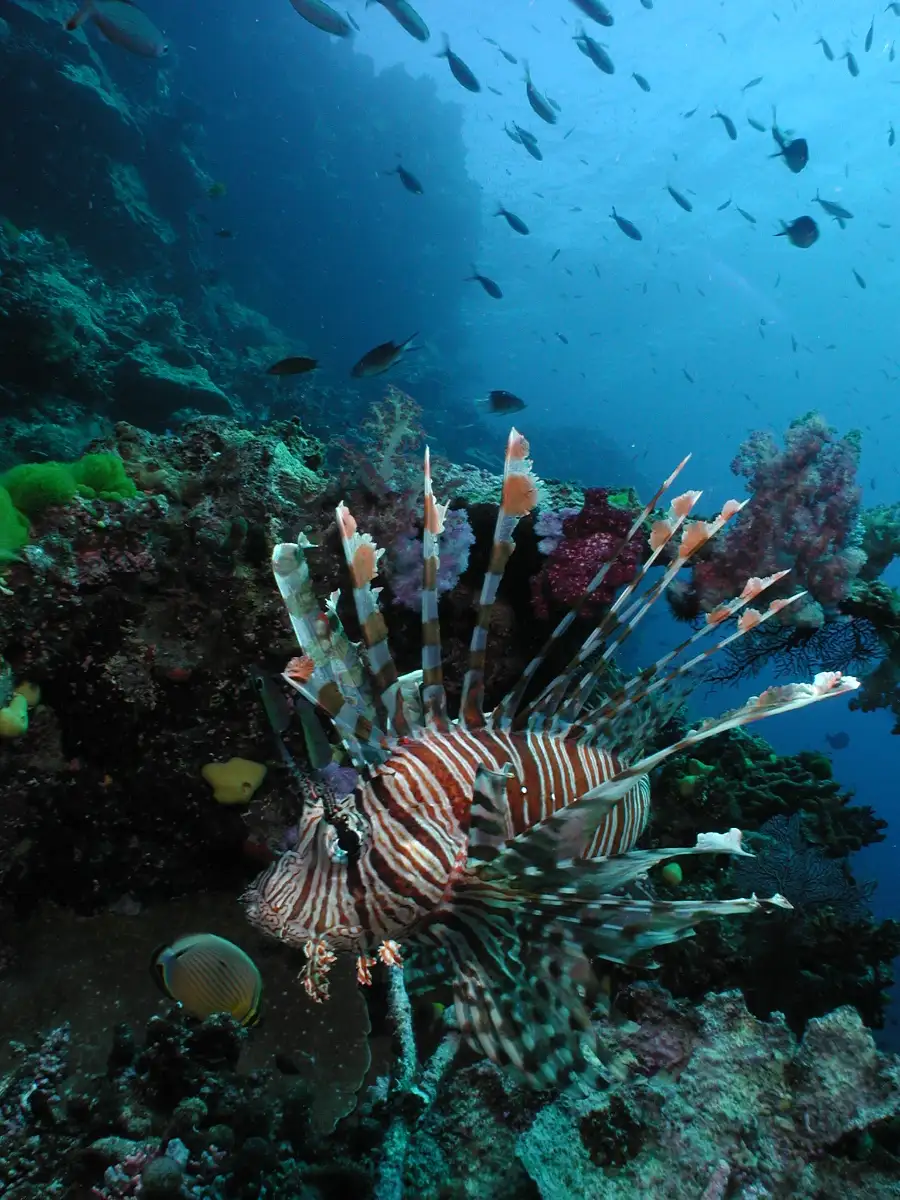
- Lionfish > Lionfish are very beautiful and as long as you give it space and do not aggravate it they are usually calm. If you get too close you could pose as a predator to the lionfish and you may get stung. The lionfish has 18 venomous spines in total, 13 on the dorsal fin, 3 on the anal fin and 1 on each pelvic fin (theScottHarrell, 2013). A lionfishes venom is similar in toxicity to cobra venom as it is made up of a neuromuscular toxin. Luckily, lionfish stings are not usually life threatening to healthy people. (Lionfish Sting: Symptoms, Treatment, and Recovery, 2020)
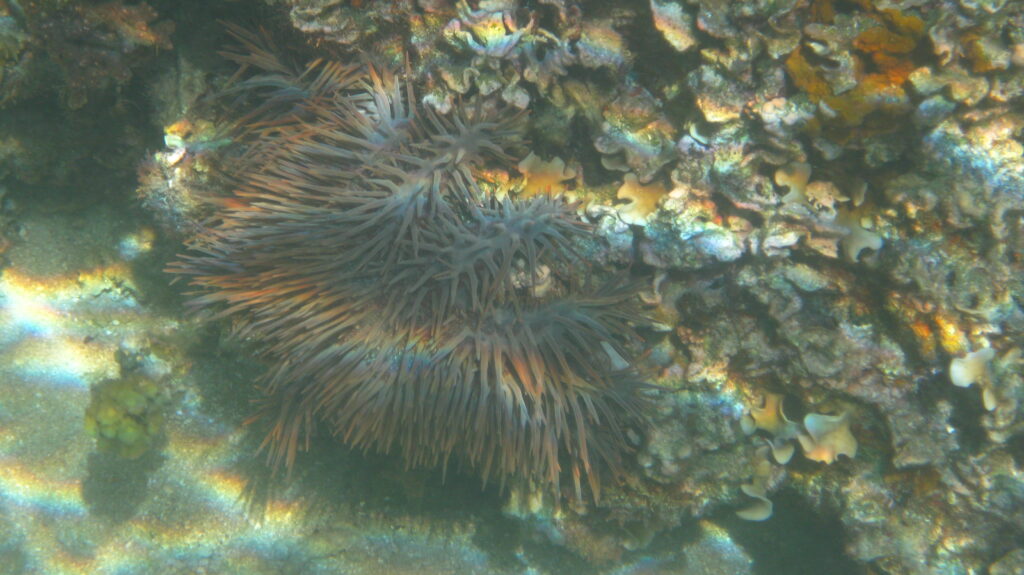
- Crown of thorns > Crown of Thorns are one of the biggest starfish species, they prey on coral polyps and so are not very good for the environment. Crown of Thorns are bottom dwellers making it easy to avoid their thorn-like venomous spikes. (Crown of Thorns Starfish Sting Symptoms and Treatment, n.d.)
- Banded Sea Kraits > Although they look intimidating, banded sea kraits are docile creatures and will only attack if provoked (Forewarned Is Forearmed – Potentially Dangerous Critters – FIJI Shores and Marinas, 2013). So simply leave them alone and observe them from a distance.
SAFETY FOR THE ENVIRONMENT
- Do not stand on the coral, always make sure to find a clear sandy patch to step on.
- Do not take anything out of the ocean to keep, such as shells, coral or starfish as they all are or have living creatures inside of them that die when taken out of their habitat.
- Make sure to swim at high tide or a rising tide. If you swim at low tide you will most definitely disturb the environment by kicking coral and stirring up sand. Swimming at low tide can also injure you.